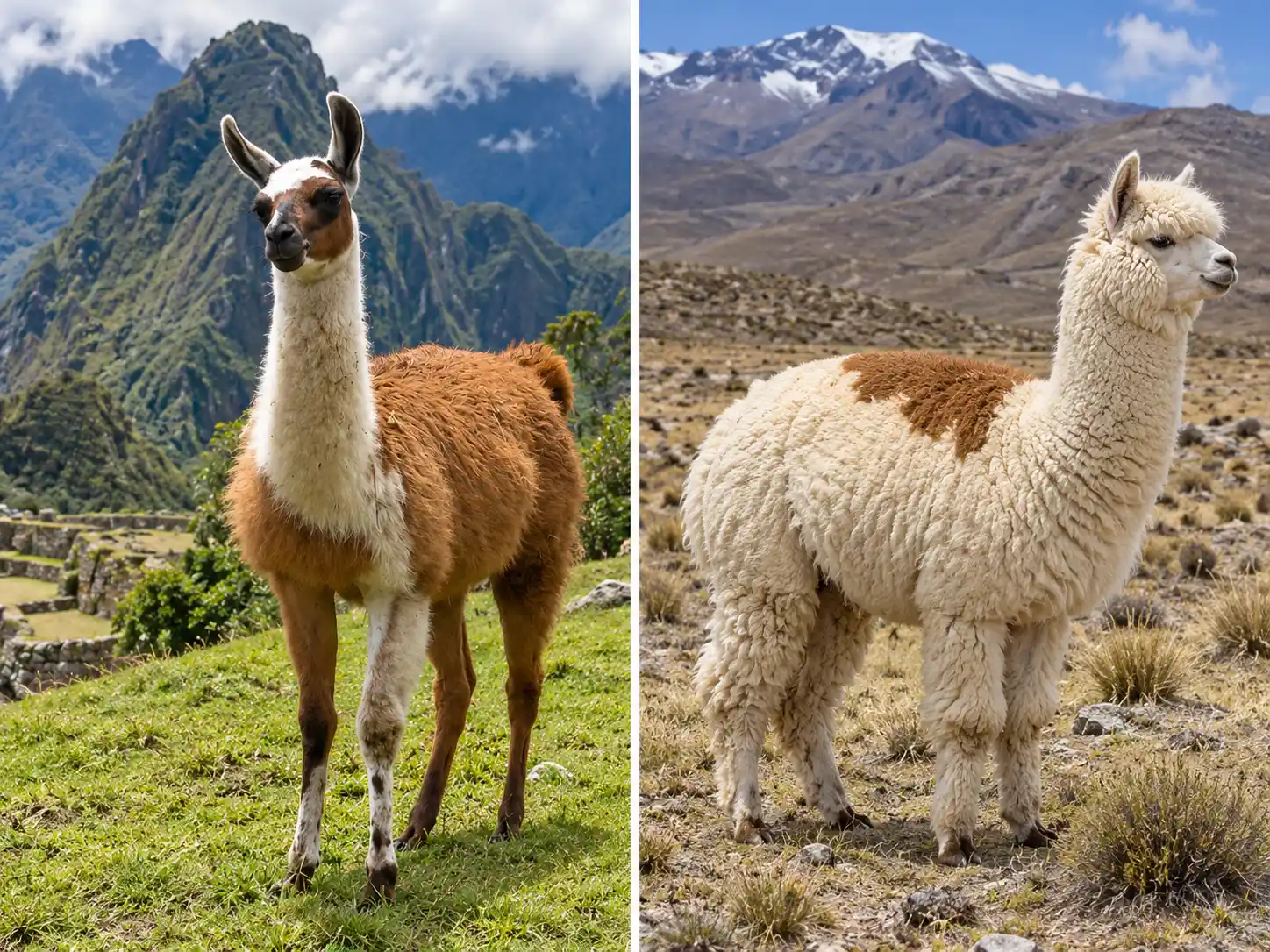
Llamas are bigger, with long banana-shaped ears and a long face, and were bred as pack animals. Alpacas are smaller, with short pointed ears, a fluffy face and very soft wool, and were bred for their fiber. Both live in the Andes of Peru, and their wild relatives are the vicuña and the guanaco.
| Size | Llama: up to about 1.8 m to the head · Alpaca: about 1.5 m |
|---|---|
| Weight | Llama: about 130-200 kg · Alpaca: about 50-90 kg |
| Ears | Llama: long, curved like bananas · Alpaca: short and pointed |
| Main use | Llama: carrying loads · Alpaca: wool (fiber) |
| Wild relatives | Llama ← guanaco · Alpaca ← vicuña |
| Where to see them | Cusco region: Sacred Valley, Rainbow Mountain, Humantay Lake trails |
For a visitor in Cusco, every fluffy animal on the street is a llama. For a Peruvian, the difference is obvious, and once you know what to look at, it will be for you too.
Here are the simple ways our guides teach travelers to tell llamas and alpacas apart, plus their wild cousins and the best places to meet all of them in Peru.
Table of Contents
The Quick Answer: 7 Differences Between Llamas And Alpacas
- Size: llamas are much bigger and taller; an alpaca’s head usually reaches your shoulder.
- Ears: llamas have long, curved, banana-shaped ears; alpacas have short, straight, pointed ears.
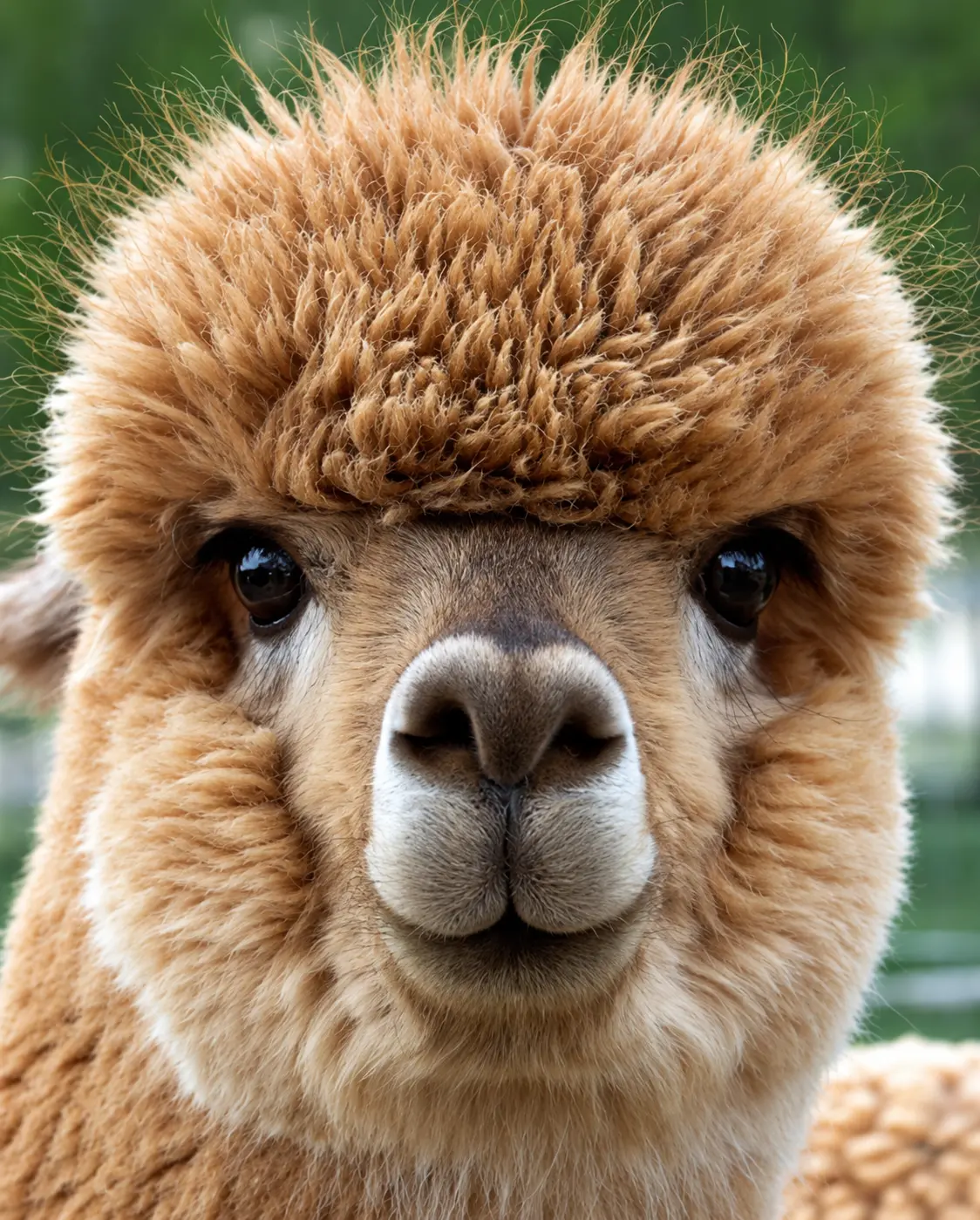
- Face: llamas have a long face with less hair; alpacas have a short, fluffy, teddy-bear face.
- Wool: alpaca fiber is finer and softer; llama wool is coarser.
- Back: llamas have a flatter back and longer legs, made for carrying loads.
- Use: llamas were bred as pack animals; alpacas for their fiber.
- Personality: llamas are more independent and protective; alpacas are shyer and stay close to the herd.
Where Do Llamas And Alpacas Come From?
Both were domesticated in the Andes thousands of years ago, long before the Incas. Genetic studies show that llamas descend from the wild guanaco and alpacas from the wild vicuña. For Andean cultures they were essential: transport, wool, meat, fertilizer and offerings in ceremonies.
Today Peru has the largest population of alpacas in the world, and alpaca fiber is one of the country’s best-known products.
What About Vicuñas And Guanacos?
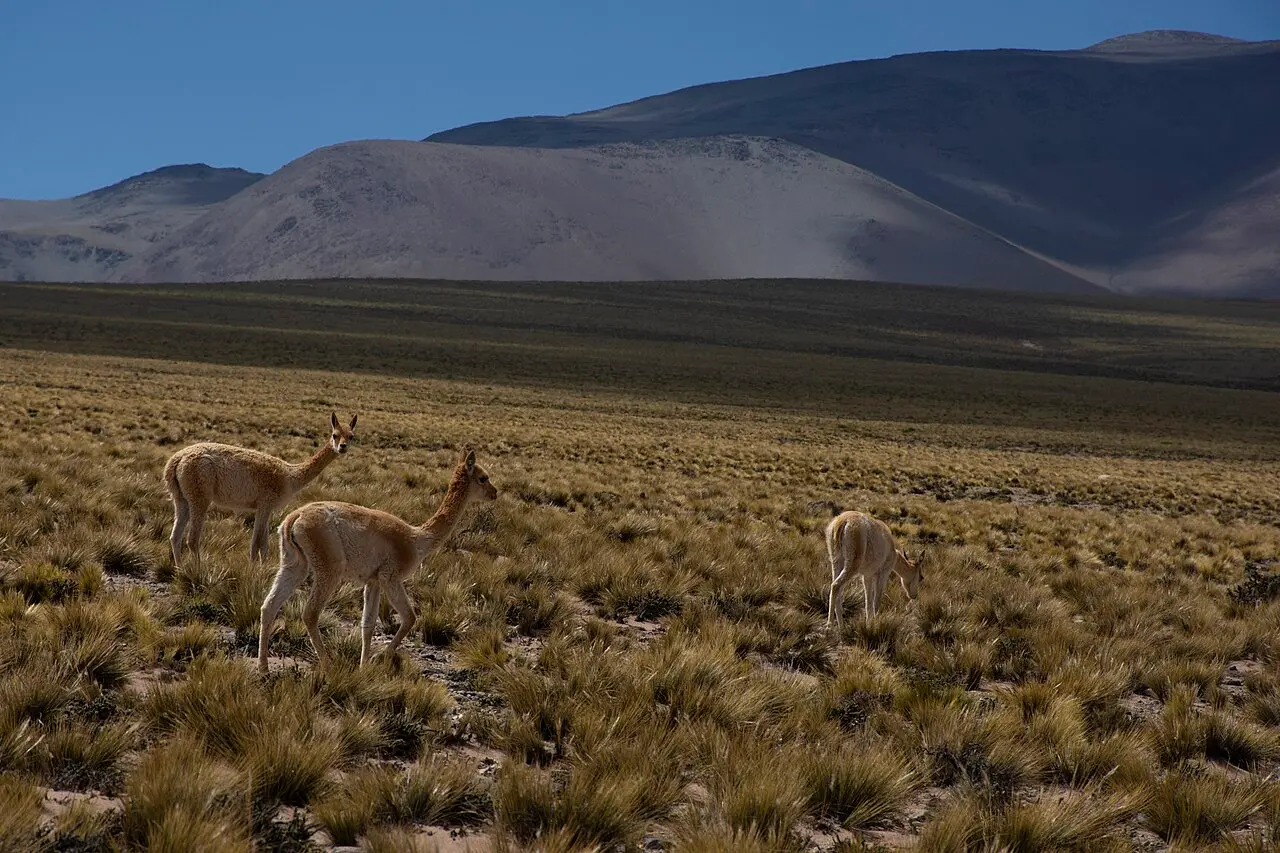
The vicuña is the wild relative of the alpaca and Peru’s national animal: it appears on the coat of arms. It is small and slender, light brown with a white chest, and produces one of the finest and most expensive fibers in the world. You can see wild vicuñas on high plateaus, for example on the road to Rainbow Mountain or in the Pampa Galeras reserve.
The guanaco is the wild relative of the llama, larger and more common in the south of Peru, Chile and Argentina.
Do Llamas Really Spit?
Yes, both llamas and alpacas can spit, but mostly at each other, to settle disputes over food or space. They rarely spit at people unless they feel threatened. Approach calmly, don’t grab their neck and follow the owner’s instructions.
Where To See Llamas And Alpacas In Peru
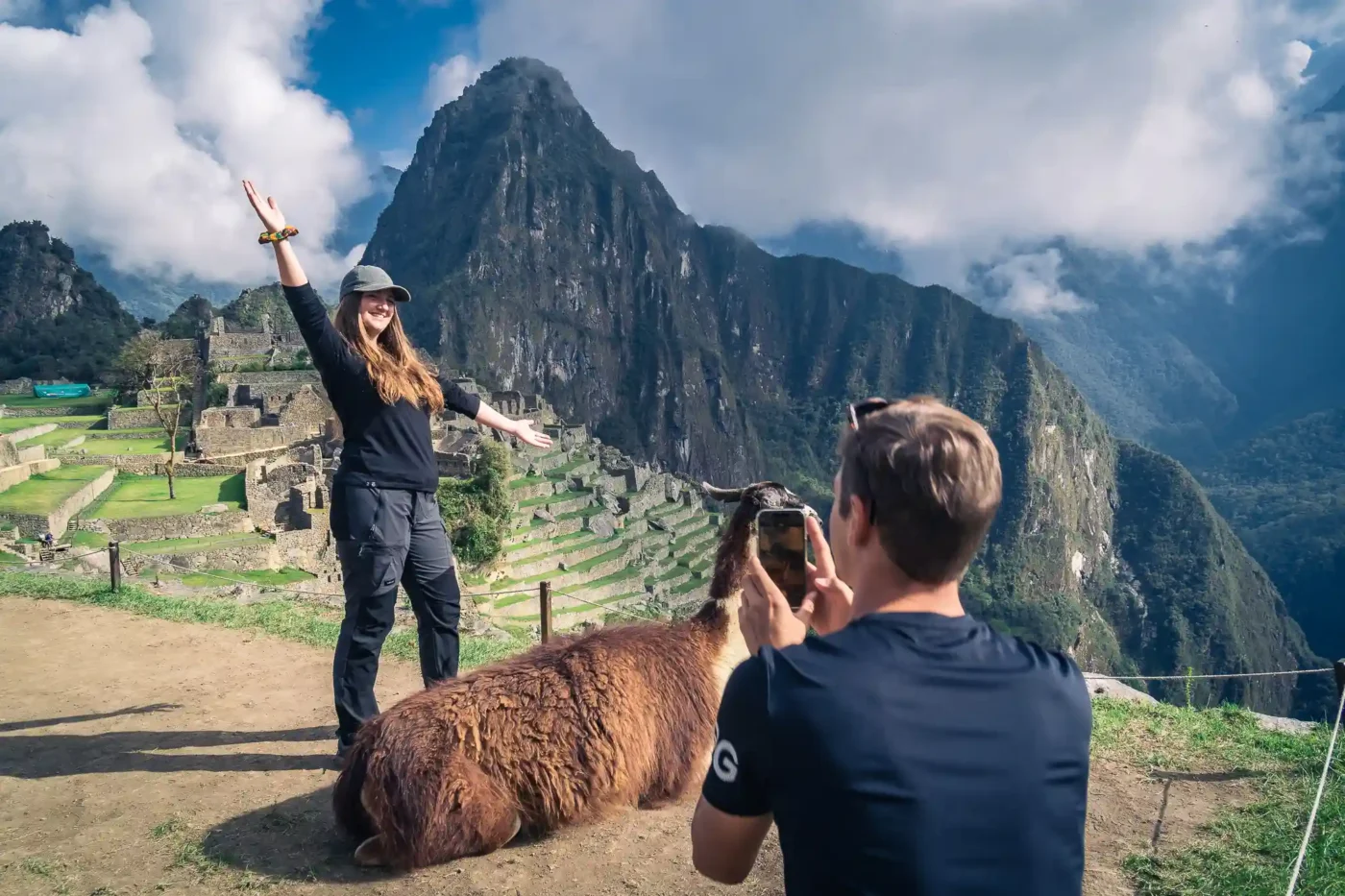
In Cusco you will meet them almost everywhere: in the streets with local women in traditional dress (they expect a small tip for photos), in textile centers of the Sacred Valley where you can see how alpaca wool is dyed and woven, and along the trails to Rainbow Mountain and Humantay Lake, where herds graze freely. At Machu Picchu, a few llamas live among the ruins and keep the grass short.
Local buddy tip
If you want to buy alpaca clothing, check the label: «baby alpaca» comes from the first shearing and is the softest; «alpaca blend» or very cheap «alpaca» sweaters in markets are often mixed with synthetic fibers. A real alpaca sweater feels cool to the touch at first and does not feel plastic.
Full Day Tour in The Sacred Valley
About 11 hours, from Cusco · From US$25 per person
Visit Andean textile communities, see llamas and alpacas up close and explore Pisac and Ollantaytambo with a local guide.
Frequently Asked Questions
Llamas are bigger, with long banana-shaped ears, and were bred to carry loads. Alpacas are smaller, with short pointed ears and softer wool, and were bred for their fiber.
Llamas tend to be more confident and curious around people; alpacas are shyer and prefer to stay with their herd.
No. The vicuña is the wild relative of the alpaca. It is smaller, lives wild in the high Andes and is Peru’s national animal.
In the Cusco region: the streets of Cusco, textile centers in the Sacred Valley, the trails to Rainbow Mountain and Humantay Lake, and even Machu Picchu.
Overview
Llamas are big pack animals with banana-shaped ears and long faces; alpacas are smaller, fluffier and bred for their soft fiber. Llamas descend from the guanaco and alpacas from the vicuña, Peru’s national animal. You can see all of them in the Cusco region, especially in the Sacred Valley and on the trails to Rainbow Mountain and Humantay Lake.